
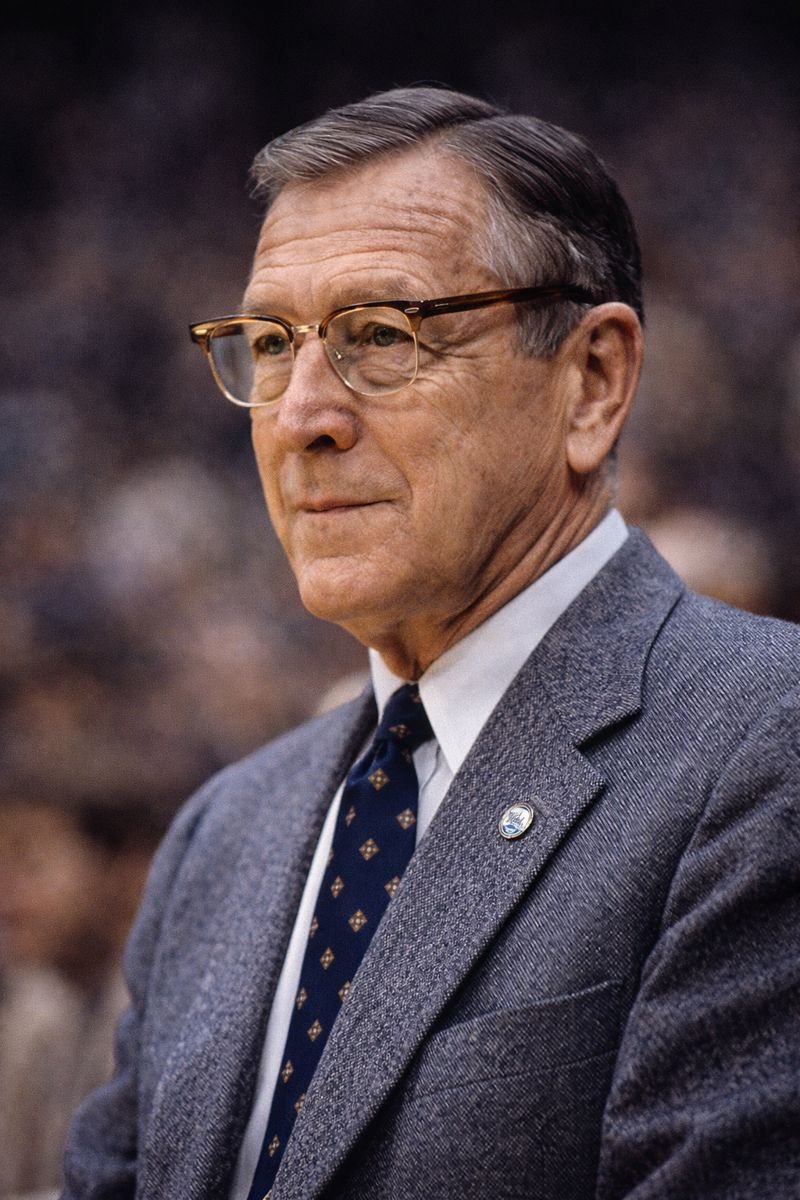
Bet Thrive’s Leaders and Legends series is reserved for the rare figures who were bigger than the game — the men and women whose impact went far beyond wins and losses and still echoes through generations. These are the few genuinely heroic characters in sports history: builders of culture, setters of standards, and examples of leadership so valuable they deserve to be studied forever.
LEADERS AND LEGENDS: JOHN WOODEN
John Wooden belongs in Bet Thrive’s Leaders and Legends series because his legacy is bigger than banners. Yes, he coached one of the most dominant dynasties the sport has ever seen — the kind of run that still feels untouchable decades later. But Wooden’s true greatness wasn’t simply that he won. It’s how he defined winning — and how many lives he shaped while doing it.
Wooden built his teams around fundamentals, discipline, and character, and he did it with a calm authority that made players want to rise to the standard instead of fear it. That’s rare. Plenty of coaches can motivate with volume and intimidation. Wooden led with clarity and consistency. He didn’t need theatrics, because his system was the theater: details, habits, and preparation — repeated until excellence became normal.
The clearest window into his philosophy is his Pyramid of Success, a framework he created to describe the traits that produce sustained achievement. It’s one of the most influential leadership tools in sports history, and what makes it powerful is that it doesn’t read like a basketball manual. It reads like a life manual. The building blocks — things like industriousness, enthusiasm, self-control, cooperation, confidence, and competitive greatness — are portable principles that apply to sports teams, businesses, and individuals trying to thrive.
Wooden believed success starts at the bottom, with the cornerstones: hard work and enthusiasm. Hard work is obvious, but Wooden’s emphasis on enthusiasm is what separates him from most “grind culture” thinkers. He didn’t want robotic effort. He wanted energy, joy, and purpose. He believed enthusiasm ignites work and turns discipline into momentum. In a world where people burn out chasing outcomes, Wooden’s message is refreshingly clear: if you can’t sustain the spirit, you can’t sustain the standard.
Another reason Wooden’s influence has endured is that he refused to define success solely by trophies. He taught that success is peace of mind — the internal confidence that comes from knowing you made the effort to become the best you’re capable of becoming. That mindset is a shield against the modern obsession with external validation. It tells competitors and leaders: measure yourself by the standards you control — preparation, effort, integrity, and improvement — and let results be the byproduct, not the identity.
This is why Wooden’s leadership and influence on people was even greater than his unmatched excellence in the gym. He didn’t just win games; he built men. He cared about the person behind the jersey, and that care created loyalty, trust, and a culture where players were willing to sacrifice for something bigger than themselves. He was known for small, consistent acts — encouragement, personal notes, and genuine relationships — because he understood that performance is personal, and that leadership is ultimately about people.
Wooden’s greatness wasn’t a mystery. It was a method. He created a philosophy of sustained excellence rooted in character, habits, and humility — and then lived it every day. That’s what makes him a Legend in the purest sense: not just because of what he won, but because of what he taught. Future generations don’t just need to remember John Wooden’s championships. They need to remember his blueprint for building a life worth being proud of.